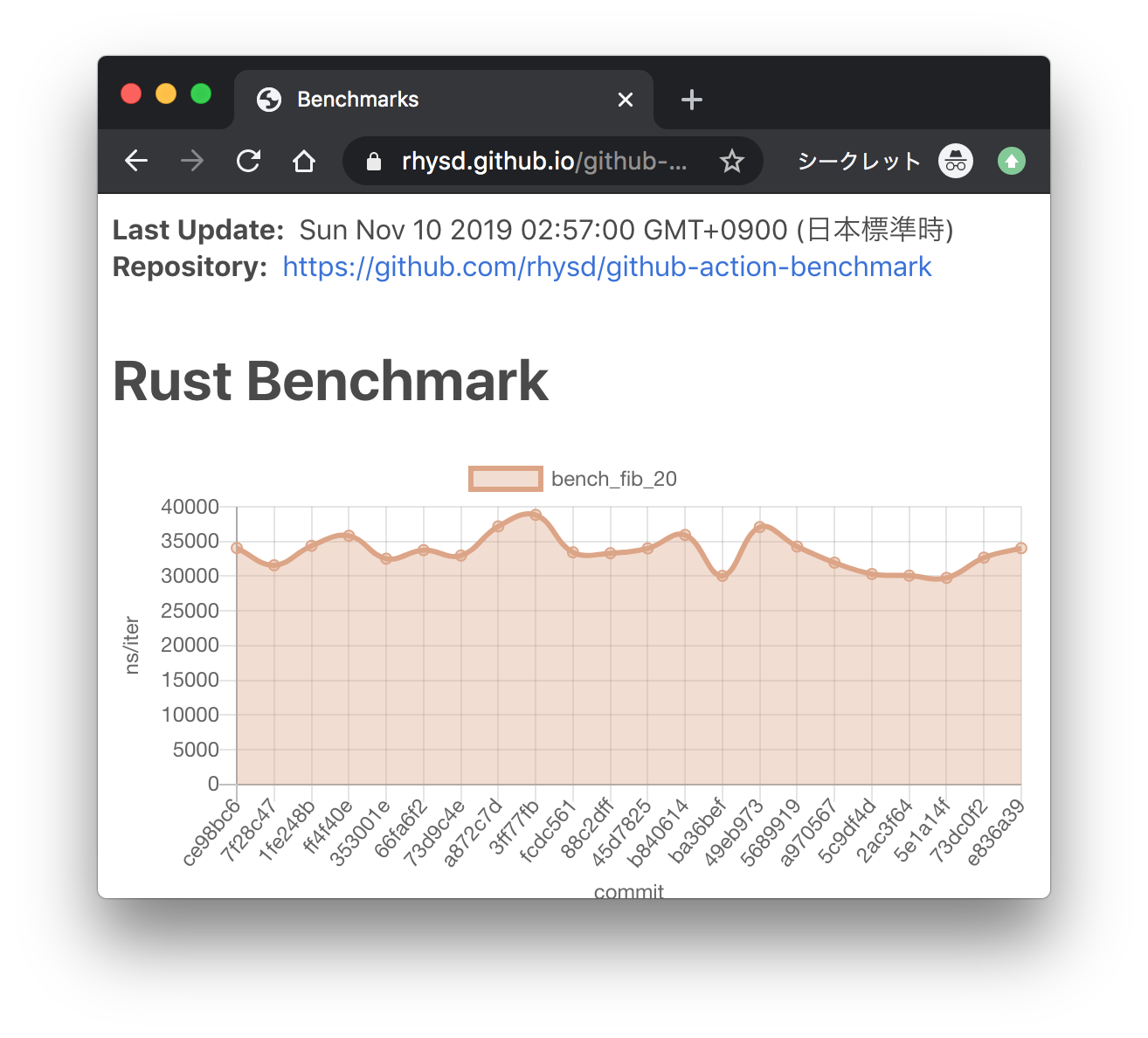
Revert "pallet-xcm: Deprecate `execute` and `send` in favor of
`execute_blob` and `send_blob` (#3749)"

This reverts commit feee773d15.

---------

Co-authored-by: Adrian Catangiu <adrian@parity.io>
Co-authored-by: Javier Bullrich <javier@bullrich.dev>
This PR:
- adds `EnsureDecodableXcm` (testing) router that attempts to *encode*
and *decode* passed XCM `message` to ensure that the receiving side will
be able to decode, at least with the same XCM version.
- fixes `pallet_xcm` / `pallet_xcm_benchmarks` assets data generation

Relates to investigation of
https://substrate.stackexchange.com/questions/11288 and missing fix
https://github.com/paritytech/polkadot-sdk/pull/2129 which did not get
into the fellows 1.1.X release.

## Questions/TODOs

- [x] fix XCM benchmarks, which produces undecodable data - new router
catched at least two cases
  - `BoundedVec exceeds its limit`
  - `Fungible asset of zero amount is not allowed`
- [x] do we need to add `sort` to the `prepend_with` as we did for
reanchor [here](https://github.com/paritytech/polkadot-sdk/pull/2129)?
@serban300 (**created separate/follow-up PR**:
https://github.com/paritytech/polkadot-sdk/pull/4235)
- [x] We added decoding check to `XcmpQueue` -> `validate_xcm_nesting`,
why not to added to the `ParentAsUmp` or `ChildParachainRouter`?
@franciscoaguirre (**created separate/follow-up PR**:
https://github.com/paritytech/polkadot-sdk/pull/4236)
- [ ] `SendController::send_blob` replace `VersionedXcm::<()>::decode(`
with `VersionedXcm::<()>::decode_with_depth_limit(MAX_XCM_DECODE_DEPTH,
data)` ?

---------

Co-authored-by: Adrian Catangiu <adrian@parity.io>
This PR ensures that the reported pruned blocks are unique.

While at it, ensure that the best block event is properly generated when
the last best block is a fork that will be pruned in the future.

To achieve this, the chainHead keeps a LRU set of reported pruned blocks
to ensure the following are not reported twice:

```bash
	 finalized -> block 1 -> block 2 -> block 3

	                      -> block 2 -> block 4 -> block 5

	           -> block 1 -> block 2_f -> block 6 -> block 7 -> block 8
```

When block 7 is finalized the branch [block 2; block 3] is reported as
pruned.
When block 8 is finalized the branch [block 2; block 4; block 5] should
be reported as pruned, however block 2 was already reported as pruned at
the previous step.

This is a side-effect of the pruned blocks being reported at level N -
1. For example, if all pruned forks would be reported with the first
encounter (when block 6 is finalized we know that block 3 and block 5
are stale), we would not need the LRU cache.

cc @paritytech/subxt-team

Closes https://github.com/paritytech/polkadot-sdk/issues/3658

---------

Signed-off-by: Alexandru Vasile <alexandru.vasile@parity.io>
Co-authored-by: Sebastian Kunert <skunert49@gmail.com>
Introduce `PalletId` as an additional seed parameter for pool's account
id derivation.

The PR also introduces the `pallet_asset_conversion_ops` pallet with a
call to migrate a given pool to thew new account. Additionally
`fungibles::lifetime::ResetTeam` and `fungible::lifetime::Refund`
traits, to facilitate the migration of pools.

---------

Co-authored-by: command-bot <>
This PR introduces changes enabling the transfer of coretime regions via
XCM.

TL;DR: There are two primary issues that are resolved in this PR:

1. The `mint` and `burn` functions were not implemented for coretime
regions. These operations are essential for moving assets to and from
the XCM holding register.
2. The transfer of non-fungible assets through XCM was previously
disallowed. This was due to incorrectly benchmarking non-fungible asset
transfers via XCM, which led to assigning it a weight of `Weight::Max`,
effectively preventing its execution.

### `mint_into` and `burn` implementation

This PR addresses the issue with cross-chain transferring regions back
to the Coretime chain. Remote reserve transfers are performed by
withdrawing and depositing the asset to and from the holding registry.
This requires the asset to support burning and minting functionality.

This PR adds burning and minting; however, they work a bit differently
than usual so that the associated region record is not lost when
burning. Instead of removing all the data, burning will set the owner of
the region to `None`, and when minting it back, it will set it to an
actual value. So, when cross-chain transferring, withdrawing into the
registry will remove the region from its original owner, and when
depositing it from the registry, it will set its owner to another
account

This was originally implemented in this PR: #3455, however we decided to
move all of it to this single PR
(https://github.com/paritytech/polkadot-sdk/pull/3455#discussion_r1547324892)

### Fixes made in this PR

- Update the `XcmReserveTransferFilter` on coretime chain since it is
meant as a reserve chain for coretime regions.
- Update the XCM benchmark to use `AssetTransactor` instead of assuming
`pallet-balances` for fungible transfers.
- Update the XCM benchmark to properly measure weight consumption for
nonfungible reserve asset transfers. ATM reserve transfers via the
extrinsic do not work since the weight for it is set to `Weight::max()`.

Closes: https://github.com/paritytech/polkadot-sdk/issues/865

---------

Co-authored-by: Branislav Kontur <bkontur@gmail.com>
Co-authored-by: Francisco Aguirre <franciscoaguirreperez@gmail.com>
Co-authored-by: Dónal Murray <donalm@seadanda.dev>
Introduce types to define 1:1 balance conversion for different relative
asset ids/locations of native asset.

Examples:
native asset on Asset Hub presented as `VersionedLocatableAsset` type in
the context of Relay Chain is
```
{
  `location`: (0, Parachain(1000)),
  `asset_id`: (1, Here),
}
```
and it's balance should be converted 1:1 by implementations of
`ConversionToAssetBalance` trait.

---------

Co-authored-by: Branislav Kontur <bkontur@gmail.com>
`LiveAsset` is an error to be returned when an asset is not supposed to
be live.
And `AssetNotLive` is an error to be returned when an asset is supposed
to be live, I don't think frozen qualifies as live.
This PR mainly removes `xcm::v3` stuff from `assets-common` to make it
more generic and facilitate the transition to newer XCM versions. Some
of the implementations here used hard-coded `xcm::v3::Location`, but now
it's up to the runtime to configure according to its needs.

Additional/consequent changes:
- `penpal` runtime uses now `xcm::latest::Location` for `pallet_assets`
as `AssetId`, because we don't care about migrations here
- it pretty much simplify xcm-emulator integration tests, where we don't
need now a lots of boilerplate conversions:
      ```
      v3::Location::try_from(...).expect("conversion works")`
      ```
- xcm-emulator tests
- split macro `impl_assets_helpers_for_parachain` to the
`impl_assets_helpers_for_parachain` and
`impl_foreign_assets_helpers_for_parachain` (avoids using hard-coded
`xcm::v3::Location`)
Cumulus test-parachain node and test runtime were still using relay
chain consensus and 12s blocktimes. With async backing around the corner
on the major chains we should switch our tests too.

Also needed to nicely test the changes coming to collators in #3168.

### Changes Overview
- Followed the [migration
guide](https://wiki.polkadot.network/docs/maintain-guides-async-backing)
for async backing for the cumulus-test-runtime
- Adjusted the cumulus-test-service to use the correct import-queue,
lookahead collator etc.
- The block validation function now uses the Aura Ext Executor so that
the seal of the block is validated
- Previous point requires that we seal block before calling into
`validate_block`, I introduced a helper function for that
- Test client adjusted to provide a slot to the relay chain proof and
the aura pre-digest
# Description
- What does this PR do?
1. Upgrades `trie-db`'s version to the latest release. This release
includes, among others, an implementation of `DoubleEndedIterator` for
the `TrieDB` struct, allowing to iterate both backwards and forwards
within the leaves of a trie.
2. Upgrades `trie-bench` to `0.39.0` for compatibility.
3. Upgrades `criterion` to `0.5.1` for compatibility.
- Why are these changes needed?
Besides keeping up with the upgrade of `trie-db`, this specifically adds
the functionality of iterating back on the leafs of a trie, with
`sp-trie`. In a project we're currently working on, this comes very
handy to verify a Merkle proof that is the response to a challenge. The
challenge is a random hash that (most likely) will not be an existing
leaf in the trie. So the challenged user, has to provide a Merkle proof
of the previous and next existing leafs in the trie, that surround the
random challenged hash.

Without having DoubleEnded iterators, we're forced to iterate until we
find the first existing leaf, like so:
```rust
        // ************* VERIFIER (RUNTIME) *************
        // Verify proof. This generates a partial trie based on the proof and
        // checks that the root hash matches the `expected_root`.
        let (memdb, root) = proof.to_memory_db(Some(&root)).unwrap();
        let trie = TrieDBBuilder::<LayoutV1<RefHasher>>::new(&memdb, &root).build();

        // Print all leaf node keys and values.
        println!("\nPrinting leaf nodes of partial tree...");
        for key in trie.key_iter().unwrap() {
            if key.is_ok() {
                println!("Leaf node key: {:?}", key.clone().unwrap());

                let val = trie.get(&key.unwrap());

                if val.is_ok() {
                    println!("Leaf node value: {:?}", val.unwrap());
                } else {
                    println!("Leaf node value: None");
                }
            }
        }

        println!("RECONSTRUCTED TRIE {:#?}", trie);

        // Create an iterator over the leaf nodes.
        let mut iter = trie.iter().unwrap();

        // First element with a value should be the previous existing leaf to the challenged hash.
        let mut prev_key = None;
        for element in &mut iter {
            if element.is_ok() {
                let (key, _) = element.unwrap();
                prev_key = Some(key);
                break;
            }
        }
        assert!(prev_key.is_some());

        // Since hashes are `Vec<u8>` ordered in big-endian, we can compare them directly.
        assert!(prev_key.unwrap() <= challenge_hash.to_vec());

        // The next element should exist (meaning there is no other existing leaf between the
        // previous and next leaf) and it should be greater than the challenged hash.
        let next_key = iter.next().unwrap().unwrap().0;
        assert!(next_key >= challenge_hash.to_vec());
```

With DoubleEnded iterators, we can avoid that, like this:
```rust
        // ************* VERIFIER (RUNTIME) *************
        // Verify proof. This generates a partial trie based on the proof and
        // checks that the root hash matches the `expected_root`.
        let (memdb, root) = proof.to_memory_db(Some(&root)).unwrap();
        let trie = TrieDBBuilder::<LayoutV1<RefHasher>>::new(&memdb, &root).build();

        // Print all leaf node keys and values.
        println!("\nPrinting leaf nodes of partial tree...");
        for key in trie.key_iter().unwrap() {
            if key.is_ok() {
                println!("Leaf node key: {:?}", key.clone().unwrap());

                let val = trie.get(&key.unwrap());

                if val.is_ok() {
                    println!("Leaf node value: {:?}", val.unwrap());
                } else {
                    println!("Leaf node value: None");
                }
            }
        }

        // println!("RECONSTRUCTED TRIE {:#?}", trie);
        println!("\nChallenged key: {:?}", challenge_hash);

        // Create an iterator over the leaf nodes.
        let mut double_ended_iter = trie.into_double_ended_iter().unwrap();

        // First element with a value should be the previous existing leaf to the challenged hash.
        double_ended_iter.seek(&challenge_hash.to_vec()).unwrap();
        let next_key = double_ended_iter.next_back().unwrap().unwrap().0;
        let prev_key = double_ended_iter.next_back().unwrap().unwrap().0;

        // Since hashes are `Vec<u8>` ordered in big-endian, we can compare them directly.
        println!("Prev key: {:?}", prev_key);
        assert!(prev_key <= challenge_hash.to_vec());

        println!("Next key: {:?}", next_key);
        assert!(next_key >= challenge_hash.to_vec());
```
- How were these changes implemented and what do they affect?
All that is needed for this functionality to be exposed is changing the
version number of `trie-db` in all the `Cargo.toml`s applicable, and
re-exporting some additional structs from `trie-db` in `sp-trie`.

---------

Co-authored-by: Bastian Köcher <git@kchr.de>
[litep2p](https://github.com/altonen/litep2p) is a libp2p-compatible P2P
networking library. It supports all of the features of `rust-libp2p`
that are currently being utilized by Polkadot SDK.

Compared to `rust-libp2p`, `litep2p` has a quite different architecture
which is why the new `litep2p` network backend is only able to use a
little of the existing code in `sc-network`. The design has been mainly
influenced by how we'd wish to structure our networking-related code in
Polkadot SDK: independent higher-levels protocols directly communicating
with the network over links that support bidirectional backpressure. A
good example would be `NotificationHandle`/`RequestResponseHandle`
abstractions which allow, e.g., `SyncingEngine` to directly communicate
with peers to announce/request blocks.

I've tried running `polkadot --network-backend litep2p` with a few
different peer configurations and there is a noticeable reduction in
networking CPU usage. For high load (`--out-peers 200`), networking CPU
usage goes down from ~110% to ~30% (80 pp) and for normal load
(`--out-peers 40`), the usage goes down from ~55% to ~18% (37 pp).

These should not be taken as final numbers because:

a) there are still some low-hanging optimization fruits, such as
enabling [receive window
auto-tuning](https://github.com/libp2p/rust-yamux/pull/176), integrating
`Peerset` more closely with `litep2p` or improving memory usage of the
WebSocket transport
b) fixing bugs/instabilities that incorrectly cause `litep2p` to do less
work will increase the networking CPU usage
c) verification in a more diverse set of tests/conditions is needed

Nevertheless, these numbers should give an early estimate for CPU usage
of the new networking backend.

This PR consists of three separate changes:
* introduce a generic `PeerId` (wrapper around `Multihash`) so that we
don't have use `NetworkService::PeerId` in every part of the code that
uses a `PeerId`
* introduce `NetworkBackend` trait, implement it for the libp2p network
stack and make Polkadot SDK generic over `NetworkBackend`
  * implement `NetworkBackend` for litep2p

The new library should be considered experimental which is why
`rust-libp2p` will remain as the default option for the time being. This
PR currently depends on the master branch of `litep2p` but I'll cut a
new release for the library once all review comments have been
addresses.

---------

Signed-off-by: Alexandru Vasile <alexandru.vasile@parity.io>
Co-authored-by: Dmitry Markin <dmitry@markin.tech>
Co-authored-by: Alexandru Vasile <60601340+lexnv@users.noreply.github.com>
Co-authored-by: Alexandru Vasile <alexandru.vasile@parity.io>
This MR contains two major changes and some maintenance cleanup.

## 1. Free Standing Pallet Benchmark Runner

Closes https://github.com/paritytech/polkadot-sdk/issues/3045, depends
on your runtime exposing the `GenesisBuilderApi` (like
https://github.com/paritytech/polkadot-sdk/pull/1492).

Introduces a new binary crate: `frame-omni-bencher`.
It allows to directly benchmark a WASM blob - without needing a node or
chain spec.

This makes it much easier to generate pallet weights and should allow us
to remove bloaty code from the node.
It should work for all FRAME runtimes that dont use 3rd party host calls
or non `BlakeTwo256` block hashing (basically all polkadot parachains
should work).

It is 100% backwards compatible with the old CLI args, when the `v1`
compatibility command is used. This is done to allow for forwards
compatible addition of new commands.

### Example (full example in the Rust docs)

Installing the CLI:
```sh
cargo install --locked --path substrate/utils/frame/omni-bencher
frame-omni-bencher --help
```

Building the Westend runtime:
```sh
cargo build -p westend-runtime --release --features runtime-benchmarks
```

Benchmarking the runtime:
```sh
frame-omni-bencher v1 benchmark pallet --runtime target/release/wbuild/westend-runtime/westend_runtime.compact.compressed.wasm --all
```

## 2. Building the Benchmark Genesis State in the Runtime

Closes https://github.com/paritytech/polkadot-sdk/issues/2664

This adds `--runtime` and `--genesis-builder=none|runtime|spec`
arguments to the `benchmark pallet` command to make it possible to
generate the genesis storage by the runtime. This can be used with both
the node and the freestanding benchmark runners. It utilizes the new
`GenesisBuilder` RA and depends on having
https://github.com/paritytech/polkadot-sdk/pull/3412 deployed.

## 3. Simpler args for `PalletCmd::run`

You can do three things here to integrate the changes into your node:
- nothing: old code keeps working as before but emits a deprecated
warning
- delete: remove the pallet benchmarking code from your node and use the
omni-bencher instead
- patch: apply the patch below and keep using as currently. This emits a
deprecated warning at runtime, since it uses the old way to generate a
genesis state, but is the smallest change.

```patch
runner.sync_run(|config| cmd
-    .run::<HashingFor<Block>, ReclaimHostFunctions>(config)
+    .run_with_spec::<HashingFor<Block>, ReclaimHostFunctions>(Some(config.chain_spec))
)
```

## 4. Maintenance Change
- `pallet-nis` get a `BenchmarkSetup` config item to prepare its
counterparty asset.
- Add percent progress print when running benchmarks.
- Dont immediately exit on benchmark error but try to run as many as
possible and print errors last.

---------

Signed-off-by: Oliver Tale-Yazdi <oliver.tale-yazdi@parity.io>
Co-authored-by: Liam Aharon <liam.aharon@hotmail.com>
I don't think there are any more releases to the 0.2.x versions, so best
we're on the 0.3.x release.

No change on the benchmarks, fast local time is still just as fast as
before:

new version bench:
```
fast_local_time         time:   [30.551 ns 30.595 ns 30.668 ns]
```

old version bench:
```
fast_local_time         time:   [30.598 ns 30.646 ns 30.723 ns]
```

---------

Co-authored-by: Bastian Köcher <git@kchr.de>
Defines a runtime api for `pallet-broker` for getting the current price
of a core if there is an ongoing sale.

Closes: #3413

---------

Co-authored-by: Bastian Köcher <git@kchr.de>
## Basic example showcasing a migration using the MBM framework

This PR has been built on top of
https://github.com/paritytech/polkadot-sdk/pull/1781 and adds two new
example crates to the `examples` pallet

### Changes Made:

Added the `pallet-example-mbm` crate: This crate provides a minimal
example of a pallet that uses MBM. It showcases a storage migration
where values are migrated from a `u32` to a `u64`.

---------

Signed-off-by: Oliver Tale-Yazdi <oliver.tale-yazdi@parity.io>
Co-authored-by: Oliver Tale-Yazdi <oliver.tale-yazdi@parity.io>
Co-authored-by: Liam Aharon <liam.aharon@hotmail.com>
This PR ensure that the distance between any leaf and the finalized
block is within a reasonable distance.

For a new subscription, the chainHead has to provide all blocks between
the leaves of the chain and the finalized block.
 When the distance between a leaf and the finalized block is large:
 - The tree route is costly to compute
 - We could deliver an unbounded number of blocks (potentially millions)
(For more details see
https://github.com/paritytech/polkadot-sdk/pull/3445#discussion_r1507210283)

The configuration of the ChainHead is extended with:
- suspend on lagging distance: When the distance between any leaf and
the finalized block is greater than this number, the subscriptions are
suspended for a given duration.
- All active subscriptions are terminated with the `Stop` event, all
blocks are unpinned and data discarded.
- For incoming subscriptions, until the suspended period expires the
subscriptions will immediately receive the `Stop` event.
    - Defaults to 128 blocks
- suspended duration: The amount of time for which subscriptions are
suspended
    - Defaults to 30 seconds


 cc @paritytech/subxt-team

---------

Signed-off-by: Alexandru Vasile <alexandru.vasile@parity.io>
Co-authored-by: Sebastian Kunert <skunert49@gmail.com>
Working towards migrating the `parity-bridges-common` repo inside
`polkadot-sdk`. This PR upgrades some dependencies in order to align
them with the versions used in `parity-bridges-common`

Related to
https://github.com/paritytech/parity-bridges-common/issues/2538
This PR ensures that the chainHead RPC class can be called only from
within the same connection context.

The chainHead methods are now registered as raw methods.
- https://github.com/paritytech/jsonrpsee/pull/1297
The concept of raw methods is introduced in jsonrpsee, which is an async
method that exposes the connection ID:
The raw method doesn't have the concept of a blocking method. Previously
blocking methods are now spawning a blocking task to handle their
blocking (ie DB) access. We spawn the same number of tasks as before,
however we do that explicitly.

Another approach would be implementing a RPC middleware that captures
and decodes the method parameters:
- https://github.com/paritytech/polkadot-sdk/pull/3343
However, that approach is prone to errors since the methods are
hardcoded by name. Performace is affected by the double deserialization
that needs to happen to extract the subscription ID we'd like to limit.
Once from the middleware, and once from the methods itself.

This PR paves the way to implement the chainHead connection limiter:
- https://github.com/paritytech/polkadot-sdk/issues/1505
Registering tokens (subscription ID / operation ID) on the
`RpcConnections` could be extended to return an error when the maximum
number of operations is reached.

While at it, have added an integration-test to ensure that chainHead
methods can be called from within the same connection context.

Before this is merged, a new JsonRPC release should be made to expose
the `raw-methods`:
- [x] Use jsonrpsee from crates io (blocked by:
https://github.com/paritytech/jsonrpsee/pull/1297)

Closes: https://github.com/paritytech/polkadot-sdk/issues/3207


cc @paritytech/subxt-team

---------

Signed-off-by: Alexandru Vasile <alexandru.vasile@parity.io>
Co-authored-by: Niklas Adolfsson <niklasadolfsson1@gmail.com>
derive-syn-parse v0.2.0 came out recently which (finally) adds support
for syn 2x.

Upgrading to this will remove many of the places where syn 1x was still
compiling alongside syn 2x in the polkadot-sdk workspace.

This also upgrades `docify` to 0.2.8 which is the version that upgrades
derive-syn-pasre to 0.2.0.

Additionally, this consolidates the `docify` versions in the repo to all
use the latest, and in one case upgrades to the 0.2x syntax where 0.1.x
was still being used.

---------

Co-authored-by: Liam Aharon <liam.aharon@hotmail.com>
Rejoice! Rejoice! The story is nearly over.

This PR removes stale migrations, auxiliary structures, and package
dependencies, thus making Rococo and Westend totally free from any
`im-online`-related stuff.

`im-online` still stays a part of the Substrate node and its runtime:
https://github.com/paritytech/polkadot-sdk/blob/0d9324847391e902bb42f84f0e76096b1f764efe/substrate/bin/node/runtime/src/lib.rs#L2276-L2277
I'm not sure if it makes sense to remove it from there considering that
we're not removing `im-online` from FRAME. Please share your opinion.
Closes https://github.com/paritytech/polkadot-sdk-docs/issues/70

WIP PR for an overview of how to develop tokens in FRAME.

- [x] Tokens in Substrate Ref Doc
  - High-level overview of the token-related logic in FRAME
- Improve docs with better explanation of how holds, freezes, ed, free
balance, etc, all work
- [x] Update `pallet_balances` docs
  - Clearly mark what is deprecated (currency)
- [x] Write fungible trait docs
- [x] Evaluate and if required update `pallet_assets`, `pallet_uniques`,
`pallet_nfts` docs
- [x] Absorb https://github.com/paritytech/polkadot-sdk/pull/2683/
- [x] Audit individual trait method docs, and improve if possible

Feel free to suggest additional TODOs for this PR in the comments

---------

Co-authored-by: Bill Laboon <laboon@users.noreply.github.com>
Co-authored-by: Francisco Aguirre <franciscoaguirreperez@gmail.com>
Co-authored-by: Kian Paimani <5588131+kianenigma@users.noreply.github.com>
Co-authored-by: Sebastian Kunert <skunert49@gmail.com>
This PR exports unified hostfunctions needed for parachains. Basicaly
`SubstrateHostFunctions` + `storage_proof_size::HostFunctions`.

Also removes the native executor from the parachain template.

---------

Co-authored-by: Michal Kucharczyk <1728078+michalkucharczyk@users.noreply.github.com>
The PR provides API for obtaining:
- the weight required to execute an XCM message,
- a list of acceptable `AssetId`s for message execution payment,
- the cost of the weight in the specified acceptable `AssetId`.

It is meant to address an issue where one has to guess how much fee to
pay for execution. Also, at the moment, a client has to guess which
assets are acceptable for fee execution payment.
See the related issue
https://github.com/paritytech/polkadot-sdk/issues/690.
With this API, a client is supposed to query the list of the supported
asset IDs (in the XCM version format the client understands), weigh the
XCM program the client wants to execute and convert the weight into one
of the acceptable assets. Note that the client is supposed to know what
program will be executed on what chains. However, having a small
companion JS library for the pallet-xcm and xtokens should be enough to
determine what XCM programs will be executed and where (since these
pallets compose a known small set of programs).
```Rust
pub trait XcmPaymentApi<Call>
	where
		Call: Codec,
	{
		/// Returns a list of acceptable payment assets.
		///
		/// # Arguments
		///
		/// * `xcm_version`: Version.
		fn query_acceptable_payment_assets(xcm_version: Version) -> Result<Vec<VersionedAssetId>, Error>;
		/// Returns a weight needed to execute a XCM.
		///
		/// # Arguments
		///
		/// * `message`: `VersionedXcm`.
		fn query_xcm_weight(message: VersionedXcm<Call>) -> Result<Weight, Error>;
		/// Converts a weight into a fee for the specified `AssetId`.
		///
		/// # Arguments
		///
		/// * `weight`: convertible `Weight`.
		/// * `asset`: `VersionedAssetId`.
		fn query_weight_to_asset_fee(weight: Weight, asset: VersionedAssetId) -> Result<u128, Error>;
		/// Get delivery fees for sending a specific `message` to a `destination`.
		/// These always come in a specific asset, defined by the chain.
		///
		/// # Arguments
		/// * `message`: The message that'll be sent, necessary because most delivery fees are based on the
		///   size of the message.
		/// * `destination`: The destination to send the message to. Different destinations may use
		///   different senders that charge different fees.
		fn query_delivery_fees(destination: VersionedLocation, message: VersionedXcm<()>) -> Result<VersionedAssets, Error>;
	}
```
An
[example](https://gist.github.com/PraetorP/4bc323ff85401abe253897ba990ec29d)
of a client side code.

---------

Co-authored-by: Francisco Aguirre <franciscoaguirreperez@gmail.com>
Co-authored-by: Adrian Catangiu <adrian@parity.io>
Co-authored-by: Daniel Shiposha <mrshiposha@gmail.com>
We witnessed really poor performance on Rococo, where we ended up with
50 on-demand cores. This was due to the fact that for each core the full
queue was processed. With this change full queue processing will happen
way less often (most of the time complexity is O(1) or O(log(n))) and if
it happens then only for one core (in expectation).

Also spot price is now updated before each order to ensure economic back
pressure.


TODO:

- [x] Implement
- [x] Basic tests
- [x] Add more tests (see todos)
- [x] Run benchmark to confirm better performance, first results suggest
> 100x faster.
- [x] Write migrations
- [x] Bump scale-info version and remove patch in Cargo.toml
- [x] Write PR docs: on-demand performance improved, more on-demand
cores are now non problematic anymore. If need by also the max queue
size can be increased again. (Maybe not to 10k)

Optional: Performance can be improved even more, if we called
`pop_assignment_for_core()`, before calling `report_processed` (Avoid
needless affinity drops). The effect gets smaller the larger the claim
queue and I would only go for it, if it does not add complexity to the
scheduler.

---------

Co-authored-by: eskimor <eskimor@no-such-url.com>
Co-authored-by: antonva <anton.asgeirsson@parity.io>
Co-authored-by: command-bot <>
Co-authored-by: Anton Vilhelm Ásgeirsson <antonva@users.noreply.github.com>
Co-authored-by: ordian <write@reusable.software>
_This PR is being continued from
https://github.com/paritytech/polkadot-sdk/pull/2206, which was closed
when the developer_hub was merged._
closes https://github.com/paritytech/polkadot-sdk-docs/issues/44

---
# Description

This PR adds a reference document to the `developer-hub` crate (see
https://github.com/paritytech/polkadot-sdk/pull/2102). This specific
reference document covers defensive programming practices common within
the context of developing a runtime with Substrate.

In particular, this covers the following areas:

- Default behavior of how Rust deals with numbers in general
- How to deal with floating point numbers in runtime / fixed point
arithmetic
- How to deal with Integer overflows
- General "safe math" / defensive programming practices for common
pallet development scenarios
- Defensive traits that exist within Substrate, i.e.,
`defensive_saturating_add `, `defensive_unwrap_or`
- More general defensive programming examples (keep it concise)
- Link to relevant examples where these practices are actually in
production / being used
- Unwrapping (or rather lack thereof) 101

todo
--
- [x] Apply feedback from previous PR
- [x] This may warrant a PR to append some of these docs to
`sp_arithmetic`

---------

Co-authored-by: Oliver Tale-Yazdi <oliver.tale-yazdi@parity.io>
Co-authored-by: Gonçalo Pestana <g6pestana@gmail.com>
Co-authored-by: Kian Paimani <5588131+kianenigma@users.noreply.github.com>
Co-authored-by: Francisco Aguirre <franciscoaguirreperez@gmail.com>
Co-authored-by: Radha <86818441+DrW3RK@users.noreply.github.com>
The PR adds two things:
1. Runtime API exposing the whole claim queue
2. Consumes the API in `collation-generation` to fetch the next
scheduled `ParaEntry` for an occupied core.

Related to https://github.com/paritytech/polkadot-sdk/issues/1797
This PR removes sp-std crate from substrate/primitives sub-directories.

For now crates that have `pub use` of sp-std or export macros that would
necessitate users of the macros to `extern crate alloc` have been
excluded from this PR.

There should be no breaking changes in this PR.

---------

Co-authored-by: Koute <koute@users.noreply.github.com>
 dependabot[bot]